
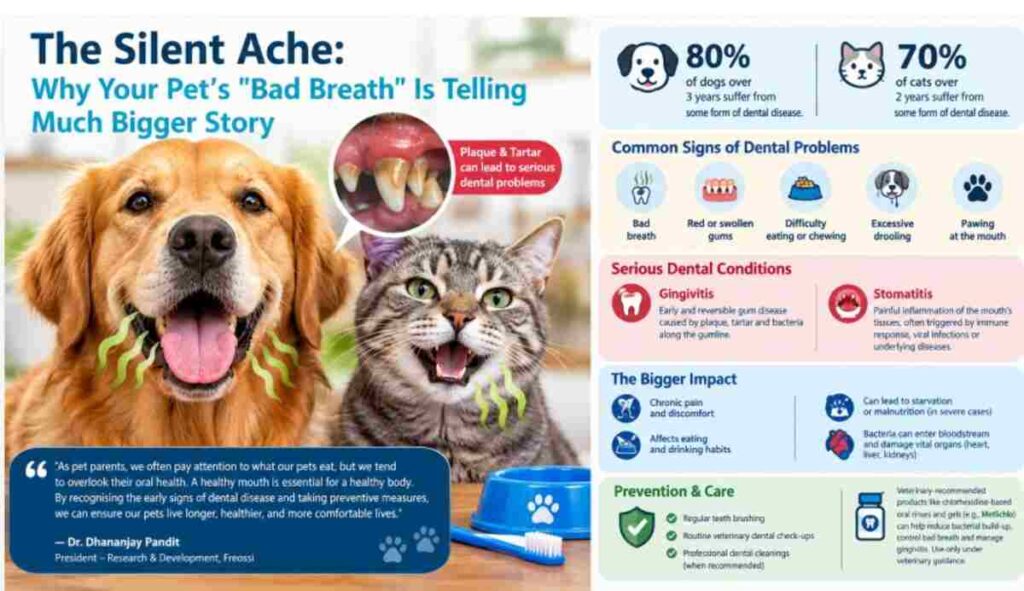
Bad breath in pets is a common problem in many households, and many pet parents often consider it normal or rely on home remedies to manage it. However, persistent bad breath should never be ignored, as it can be an early sign of underlying dental disease. According to experts, around 80% of dogs over three years of age and 70% of cats over two years of age suffer from some form of dental disease, making oral health an important aspect of overall pet care.
Common signs of dental problems in pets include bad breath, red or swollen gums, difficulty eating or chewing, excessive drooling, and pawing at the mouth. These symptoms can indicate serious oral health conditions such as gingivitis and stomatitis.
Gingivitis is the early and reversible stage of gum disease caused by plaque, tartar build-up, and bacteria along the gumline. If left untreated, it can progress and lead to more severe dental complications. Stomatitis, on the other hand, is a painful and severe inflammation of the tissues lining the mouth. It is commonly triggered by an overactive immune response to dental plaque, viral infections, or underlying systemic diseases. Pets suffering from stomatitis often experiences significant pain, excessive drooling, bad breath, and difficulty eating.
Poor oral health can have a considerable impact on a pet’s quality of life. Dental diseases can cause chronic pain and discomfort, affect eating and drink habits, and, in severe cases, lead to starvation or malnutrition. Moreover, bacteria from untreated dental infections can enter the bloodstream and potentially damage vital organs such as the heart, liver, and kidneys, leading to more serious health concerns.
The good news is that most dental diseases are preventable when detected early. Regular teeth brushing, routine veterinary dental check-ups, and professional dental cleanings when recommended can go a long way in maintaining your pet’s oral and overall health.
Veterinarians may also prescribe or recommend dental care products such as chlorhexidine-based oral rinses and gels, including products like Metlichlo, to help reduce bacterial build-up, control bad breath, and support the management of gingivitis and other oral conditions. These products should always be used under veterinary guidance, as the appropriate treatment depends on the pet’s age, health status, and the severity of the dental problem.
“As pet parents, we often pay attention to what our pets eat, but we tend to overlook their oral health. A healthy mouth is essential for a healthy body. By recognising the early signs of dental disease and taking preventive measures, we can ensure our pets live longer, healthier, and more comfortable lives.”
— Dr. Dhananjay Pandit, President – Research & Development, Freossi